
Sciatica pain can make simple movements feel difficult. Getting out of bed, sitting at a desk, walking around the house, or bending down to pick something up can suddenly become uncomfortable when the sciatic nerve is irritated.
Many people experiencing sciatica ask the same question: “What exercises can help relieve sciatic nerve pain?”
The answer depends on what is causing the irritation and how your body responds to movement.
For some people, gentle stretching and mobility exercises may help reduce pressure and improve movement. For others, strengthening exercises may be needed to improve spinal support and prevent recurring symptoms.
The right sciatica exercises are not about forcing painful movements. They are about helping your lower back, hips, and surrounding muscles work together more efficiently.
Table of Contents
- What Is Sciatica and Why Does It Cause Pain?
- Common Symptoms of Sciatica
- Can Exercise Really Help Sciatica Pain?
- 10 Best Exercises for Sciatica Relief
- Exercises and Movements to Avoid With Sciatica
- How Physical Therapy Helps Sciatica Recovery
- How to Prevent Recurring Sciatica Pain
- Sciatica Treatment in Houston
- Frequently Asked Questions About Sciatica Exercises
Important Note
Sciatica symptoms can range from mild irritation to significant nerve-related discomfort. Understanding the cause of your pain is important because the best exercise program depends on your individual condition. The right movements can support recovery, while the wrong exercises may increase irritation.
What Is Sciatica and Why Does It Cause Pain?
Sciatica refers to pain that follows the path of the sciatic nerve, which is the largest nerve in the body.
The sciatic nerve begins in the lower spine and travels through the hips and buttocks before extending down each leg.
When this nerve becomes irritated, compressed, or inflamed, symptoms may develop along its pathway.
Sciatica is not a condition by itself. Instead, it is a symptom caused by an underlying issue affecting the nerve.
Common Causes of Sciatica
Sciatic nerve irritation can happen for several reasons, including:
- Herniated discs
- Bulging discs
- Spinal stenosis
- Muscle tightness around the hip
- Lower back injuries
- Changes in spinal movement
- Poor posture or movement habits
For example, a disc problem in the lower spine may place pressure on a nerve root, causing pain that travels from the back into the leg.
In other cases, tight muscles around the hip may contribute to irritation of the nerve pathway.
This is why sciatica treatment should focus on identifying the reason behind the symptoms rather than treating pain alone.
Absolute Physical Therapy provides specialized care for sciatica treatment in Houston, helping patients address pain, mobility limitations, and movement problems through personalized rehabilitation.
Common Symptoms of Sciatica
Sciatica symptoms can feel different from person to person.
Some people experience mild discomfort, while others may have severe pain that affects daily activities.
Common symptoms include:
- Pain traveling from the lower back into the buttock or leg
- Tingling sensations
- Numbness
- Burning or electric-like pain
- Muscle weakness
- Difficulty sitting for long periods
- Pain that worsens with certain movements
Why Does Sciatica Often Affect One Side?
Many people notice symptoms on only one side of the body.
This happens because a specific nerve root may become irritated on one side of the spine.
The location of symptoms often provides clues about which area may be involved.
When Sciatica Pain Needs Medical Attention
While many cases of sciatica improve with conservative treatment, some symptoms require professional evaluation.
You should seek medical guidance if you experience:
- Severe or worsening pain
- Progressive weakness
- Loss of normal movement
- Symptoms affecting daily function
- Pain following a significant injury
Can Exercise Really Help Sciatica Pain?
Many people with sciatica worry that exercise will make their pain worse.
This concern is understandable because certain movements may increase symptoms during flare-ups.
However, appropriate exercises can often play an important role in recovery.
Movement helps improve circulation, maintain flexibility, strengthen supporting muscles, and improve how the spine and hips function together.
How Exercises May Help Sciatica
Properly selected exercises may help by:
- Reducing stiffness in the lower back and hips
- Improving spinal mobility
- Strengthening muscles that support the spine
- Improving posture and movement patterns
- Reducing stress on irritated areas
The goal is not to “stretch the nerve away” or force the pain to disappear immediately.
The goal is to create better movement patterns that allow the body to recover.
Why One Exercise Does Not Work for Everyone
Sciatica has many possible causes.
An exercise that helps one person may not feel comfortable for another person.
For example, someone with a disc-related problem may respond differently compared with someone whose symptoms are related to muscle tightness or spinal stiffness.
This is why personalized guidance from a physical therapist can be valuable.
10 Best Exercises for Sciatica Relief
The following exercises are commonly used to support sciatica recovery. However, they should always be performed within your comfort level.
If an exercise increases sharp pain, numbness, or worsening symptoms, stop and consult a healthcare professional.
1. Gentle Walking
Walking is one of the simplest and most accessible movements for many people with sciatica.
Unlike prolonged sitting, walking encourages gentle movement through the spine and hips.
Short walks may help reduce stiffness and improve circulation.
Many people with lower back pain find that regular walking helps them gradually return to normal activities.
2. Knee-to-Chest Stretch
The knee-to-chest stretch gently targets the lower back area.
This movement may help improve flexibility and reduce tension around the lumbar region.
To perform this exercise:
- Lie comfortably on your back
- Bring one knee toward your chest
- Hold gently without forcing the movement
- Repeat with the opposite leg
The movement should feel like a comfortable stretch, not a painful pull.
3. Cat-Cow Stretch
The cat-cow stretch is a gentle spinal mobility exercise.
It encourages controlled movement through the lower back and may help reduce stiffness.
This exercise is often useful for people who feel tight after sitting for long periods.
4. Child’s Pose Stretch
Child’s pose gently stretches the lower back and hips.
Some people find this position relaxing because it reduces tension around the spine.
However, people with certain disc-related symptoms may not tolerate this movement comfortably.
Always pay attention to how your body responds.

5. Piriformis Stretch
The piriformis muscle is located deep in the buttock area near the sciatic nerve.
When this muscle becomes tight, some people may experience symptoms similar to sciatica.
A gentle piriformis stretch may help improve hip flexibility and reduce muscle tension.
6. Pelvic Tilts
Pelvic tilts are gentle movements that help improve awareness and control of the lower back and abdominal muscles.
This exercise can help strengthen the muscles that support the spine while encouraging smoother movement in the lumbar region.
To perform pelvic tilts:
- Lie on your back with your knees bent
- Gently tighten your abdominal muscles
- Flatten your lower back slightly toward the floor
- Hold briefly and release
The goal is controlled movement rather than forceful tightening.
Pelvic tilts are often included in lower back pain exercise programs because they help patients reconnect with proper spinal movement.
7. Hamstring Stretch
Tight hamstrings can affect how the pelvis and lower back move during daily activities.
When the muscles at the back of the thigh are restricted, they may contribute to increased tension throughout the lower body.
A gentle hamstring stretch may help improve flexibility and support better movement patterns.
However, stretching should be performed carefully because aggressive stretching can sometimes irritate nerve-related symptoms.
8. Bridge Exercise
The bridge exercise helps strengthen the glute muscles, which play an important role in supporting the pelvis and lower back.
Weak glute muscles may cause the lower back to work harder during activities such as walking, lifting, and climbing stairs.
To perform a bridge:
- Lie on your back with your knees bent
- Keep your feet flat on the floor
- Tighten your core and glute muscles
- Lift your hips slowly
- Lower back down with control
Building strength gradually can help improve stability and reduce stress on the lower back.
9. Bird Dog Exercise
The bird dog exercise focuses on core stability, balance, and controlled movement.
A stable core helps support the spine during everyday activities and athletic movements.
To perform this exercise:
- Start on your hands and knees
- Extend one arm and the opposite leg
- Keep your spine stable
- Return slowly and switch sides
This exercise emphasizes control rather than speed.
10. Nerve Gliding Exercises
Nerve gliding exercises, sometimes called nerve flossing exercises, are designed to encourage gentle movement of irritated nerves.
These exercises are different from traditional stretching because the goal is not to hold the nerve in a stretched position.
Instead, the movement helps the nerve move more comfortably through surrounding tissues.
Nerve gliding exercises should be performed carefully because incorrect technique may increase symptoms.
A physical therapist can help determine whether these exercises are appropriate for your condition.
Exercises and Movements to Avoid With Sciatica
While movement is often beneficial for sciatica, certain exercises may increase irritation depending on the cause of your symptoms.
This does not mean these activities are always harmful. It means they may not be appropriate during certain stages of recovery.
Avoid Exercises That Increase Nerve Symptoms
If an exercise causes:
- Sharp shooting pain
- Increasing numbness
- More tingling down the leg
- Weakness
it may be a sign that the movement is irritating the nerve.
Be Careful With Heavy Lifting
Heavy lifting, especially with poor technique, can place additional stress on the lower back.
During a flare-up, it may be better to focus on controlled movements before returning to heavier activities.
Avoid Long Periods of Sitting
Sitting for extended periods can increase stiffness and discomfort for many people with sciatica.
If your work requires sitting, consider:
- Taking regular movement breaks
- Adjusting your workstation
- Changing positions throughout the day
How Physical Therapy Helps Sciatica Recovery
While home exercises can be helpful, many people recover faster when they have professional guidance.
Physical therapy focuses on identifying the specific factors contributing to your symptoms and creating a treatment plan designed for your body.
A physical therapist may evaluate:
- Spinal movement
- Hip flexibility
- Muscle strength
- Posture
- Walking patterns
- Movement habits
This allows treatment to address the underlying problem instead of only managing symptoms.
Customized Exercise Programs
A physical therapist can select exercises based on:
- Your pain level
- Your diagnosis
- Your mobility limitations
- Your lifestyle needs
- Your recovery goals
Someone with occasional mild sciatica may need a different program compared with someone experiencing chronic nerve pain.
Manual Therapy and Mobility Techniques
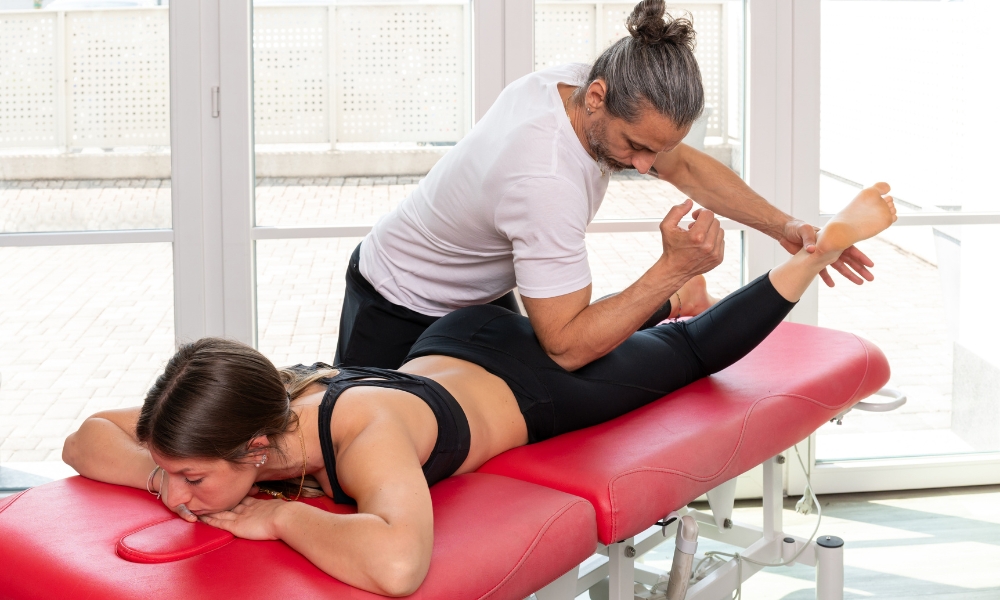
In addition to exercises, physical therapy may include hands-on techniques designed to improve movement and reduce stiffness.
These techniques may help patients move more comfortably while progressing through rehabilitation.
Absolute Physical Therapy provides comprehensive orthopedic and musculoskeletal rehabilitation to help patients recover from conditions affecting the spine, joints, and soft tissues.
How to Prevent Recurring Sciatica Pain
For many people, the biggest challenge is not only relieving sciatica but preventing it from returning.
Long-term prevention usually involves improving strength, movement habits, and body awareness.
Strengthen Supporting Muscles
Strong muscles around the core, hips, and lower body help support the spine during movement.
Regular strengthening exercises can help improve stability and reduce unnecessary stress on the lower back.
Maintain Good Posture
Posture affects how forces move through the spine.
While there is no single “perfect” posture for everyone, regularly changing positions and avoiding prolonged poor positioning can help reduce discomfort.
Use Proper Lifting Techniques
Lifting with poor mechanics can place additional stress on the lower back.
Helpful habits include:
- Keeping objects close to your body
- Avoiding sudden twisting movements
- Using your legs when lifting
- Moving with control
Stay Active
Regular physical activity supports overall spine health.
Low-impact activities such as walking, swimming, or guided exercise programs may help maintain mobility and strength.
Important Note
Sciatica pain can improve with the right combination of movement, strengthening, and professional guidance. However, severe nerve symptoms should not be ignored. Avoid self-treating serious symptoms for long periods, especially if pain, weakness, or numbness continues to worsen.
Sciatica Treatment in Houston: Personalized Care for Nerve Pain Relief
Living with sciatica can affect nearly every part of your daily routine. Sitting at work, driving, exercising, sleeping, or simply walking comfortably can become difficult when nerve pain travels from your lower back into your hip or leg.
While exercises can be an important part of recovery, the most effective approach depends on understanding why the sciatic nerve is irritated in the first place.
At Absolute Physical Therapy, patients receive personalized rehabilitation programs designed to address the underlying causes of sciatica, improve movement, and help restore daily function.
A physical therapist can evaluate your symptoms and create a plan that may include:
- Targeted sciatica exercises
- Lower back mobility training
- Strengthening exercises
- Posture and movement education
- Manual therapy techniques
- Functional rehabilitation
The goal is not only to reduce current discomfort but also to help prevent recurring episodes of lower back and nerve pain.
When Should You See a Physical Therapist for Sciatica?
Some people wait weeks or months hoping their symptoms will disappear naturally.
While mild cases may improve with appropriate movement and lifestyle changes, persistent symptoms may require professional evaluation.
You should consider seeing a physical therapist if:
- Your pain continues despite home care
- Sciatica affects your ability to work or exercise
- You experience recurring flare-ups
- You have difficulty sitting or standing comfortably
- You are unsure which exercises are safe
Early treatment can help identify movement problems before they become long-term limitations.
Frequently Asked Questions About Sciatica Exercises
What is the best exercise for sciatica pain?
The best exercise depends on what is causing your sciatica. Gentle movements such as walking, mobility exercises, strengthening exercises, and nerve gliding movements may help many people. A physical therapist can recommend exercises based on your specific symptoms.
Can stretching make sciatica worse?
Stretching can help some people, but aggressive stretching may increase symptoms if the nerve is irritated. Exercises should feel controlled and comfortable rather than causing sharp pain or increased nerve symptoms.
How often should I do sciatica exercises?
The frequency depends on the type of exercise and your condition. Many rehabilitation programs involve consistent daily movement, but the intensity should match your recovery stage.
Can walking help sciatica?
Walking may help many people with sciatica because it encourages gentle movement, improves circulation, and prevents stiffness. However, walking should be adjusted if it significantly increases symptoms.
Are lower back pain exercises good for sciatica?
Many lower back pain exercises can support sciatica recovery because they improve spinal mobility, strengthen supporting muscles, and improve movement control. However, the right exercises depend on the underlying cause of the pain.
How long does it take for sciatica to improve with exercise?
Recovery time varies depending on the cause and severity of symptoms. Some people notice improvement within weeks, while others may require a longer rehabilitation program.
Should I exercise when my sciatica is flaring up?
During a flare-up, gentle movement may be helpful, but intense exercises may need to be avoided temporarily. A healthcare professional can help determine which movements are appropriate.
Final Thoughts on Exercises for Sciatica Relief
Sciatica pain can be frustrating, especially when it interferes with activities you enjoy. However, the right approach can help many people regain mobility, reduce discomfort, and return to normal activities.
The best sciatica exercises are not necessarily the most difficult ones. They are the movements that match your body’s needs and help improve strength, flexibility, and control over time.
Consistency is one of the most important parts of recovery. Gentle, regular movement combined with professional guidance can often provide better results than simply waiting for symptoms to disappear.
If your sciatic nerve pain is affecting your daily life, a personalized physical therapy program can help identify the cause of your symptoms and create a safe path toward recovery.
At Absolute Physical Therapy, treatment focuses on helping patients move better, manage pain, and regain confidence through evidence-based rehabilitation.
Medical Disclaimer: This article is for educational purposes only and does not replace professional medical advice, diagnosis, or treatment. If you experience severe pain, worsening numbness, weakness, or persistent symptoms, consult a qualified healthcare professional.