
Knee pain while climbing stairs is a common problem that many people experience, but it is often misunderstood. You may feel completely fine while walking on a flat surface, yet notice discomfort when stepping upward, bending your knee, or putting extra pressure through your leg.
Many people ask, “Why does my knee hurt when I go up stairs?” or “Is stair climbing bad for my knees?” The answer depends on what is causing the pain.
For some people, the discomfort comes from irritation behind the kneecap. For others, it may be related to arthritis, muscle weakness, an old injury, or the way the knee moves during activity.
The knee is designed to handle a tremendous amount of force every day. However, when certain structures become irritated or when the muscles supporting the joint are not working efficiently, activities like climbing stairs can expose the problem.
The good news is that many causes of knee pain respond well to conservative treatment. A personalized physical therapy program can help improve knee strength, movement patterns, and overall function while reducing discomfort.
Table of Contents
- Why Does My Knee Hurt When Climbing Stairs?
- Understanding How Your Knee Works
- Common Causes of Knee Pain on Stairs
- Patellofemoral Syndrome and Stair-Related Knee Pain
- Can Arthritis Cause Knee Pain When Using Stairs?
- Symptoms That May Come With Knee Pain
- When Should You Worry About Knee Pain?
- How Knee Pain Is Diagnosed
- Knee Pain Treatment Options
- How Physical Therapy Helps Knee Pain
- How to Prevent Knee Pain When Climbing Stairs
- Knee Pain Treatment in Houston
- Frequently Asked Questions
Important Note
Knee pain during stair climbing is your body’s way of telling you that something may need attention. While some causes are minor and improve with proper care, ongoing pain can sometimes point to underlying joint, muscle, or movement issues. Understanding the cause is the first step toward finding effective relief.
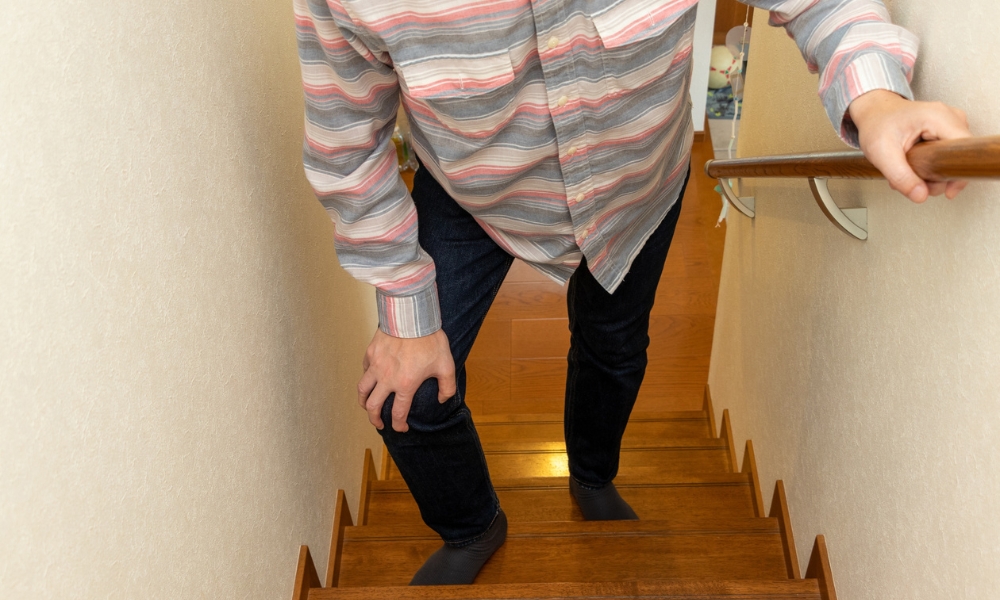
Why Does My Knee Hurt When Climbing Stairs?
Your knee may hurt when climbing stairs because stair movement places increased demand on the muscles, joints, and tissues that support the knee.
Compared with walking on a flat surface, climbing stairs requires your knee to bend deeper while supporting more of your body weight. This increased pressure can make existing problems more noticeable.
Common reasons your knee may hurt when going upstairs include:
- Irritation behind the kneecap
- Weakness in the muscles supporting the knee
- Patellofemoral syndrome
- Arthritis-related changes
- Tendon irritation
- Previous knee injuries
- Movement or alignment problems
Many people notice pain specifically when climbing stairs because the activity requires the quadriceps muscles at the front of your thigh to work harder.
If these muscles are weak or not coordinating properly, more stress may be placed on the knee joint.
Why Are Stairs Harder on the Knees?
When you climb stairs, your knee experiences increased compression compared with normal walking.
The knee must:
- Bend through a larger range of motion
- Control your body weight against gravity
- Provide stability with every step
This is why someone with a mild knee problem may feel no discomfort during everyday walking but notice pain during activities that require more strength and control.
Stair-related knee pain does not automatically mean your knee is damaged. Often, it means certain structures are being overloaded or are not functioning as efficiently as they should.
Understanding How Your Knee Works
The knee is one of the largest and most complex joints in the body. It connects the thigh bone (femur) to the shin bone (tibia) and allows you to walk, run, squat, jump, and climb.
The knee includes several important structures:
- Bones
- Cartilage
- Ligaments
- Tendons
- Muscles
The kneecap, also called the patella, plays an important role in knee movement.
It helps improve the efficiency of the quadriceps muscles and protects the front of the knee joint.
When the patella does not move smoothly within its groove, irritation may develop. This is one reason some people feel pain around or behind the kneecap when climbing stairs.
The muscles around your hip and thigh also influence how your knee moves.
Weakness in the hips or thighs can affect knee alignment and increase stress on certain areas during activities like stair climbing.
Common Causes of Knee Pain When Climbing Stairs
Knee pain on stairs can have several different causes. Identifying the reason behind your symptoms is important because treatment depends on the underlying problem.
Patellofemoral Pain Syndrome
One of the most common causes of stair-related knee pain is patellofemoral syndrome, also known as runner’s knee.
This condition involves irritation around the area where the kneecap interacts with the thigh bone.
People with patellofemoral syndrome often describe:
- Pain around or behind the kneecap
- Discomfort when climbing stairs
- Pain after sitting for long periods
- Pain during squats or bending movements
The discomfort often increases during activities that require repeated knee bending because these movements increase pressure between the kneecap and surrounding structures.
Arthritis
Arthritis is another common cause of knee pain, especially in adults experiencing gradual changes in joint function.
Osteoarthritis occurs when the protective cartilage inside the joint gradually changes over time.
This may lead to:
- Knee stiffness
- Pain with activity
- Swelling
- Reduced mobility
- Difficulty with stairs
Many people with arthritis notice that their knees feel worse after prolonged activity or after sitting for extended periods.
However, arthritis does not mean you should stop moving. Appropriate exercise and physical therapy can often help improve strength and function.
Quadriceps and Hip Muscle Weakness
Many people assume knee pain always comes from a problem inside the knee joint itself. However, the muscles surrounding the knee play a major role in protecting and controlling the joint.
The quadriceps muscles at the front of the thigh help control knee movement, especially when climbing stairs. When these muscles are weak, the knee may experience increased stress during each step.
Weak hip muscles can also contribute to knee discomfort. The muscles around your hips help control the position of your leg as you move. If they are not working properly, your knee may move in a way that increases pressure on certain tissues.
This is why effective knee rehabilitation often focuses on more than just the knee. Strengthening the hips, thighs, and surrounding muscles can improve overall movement mechanics.
Knee Tendon Problems
Tendons connect muscles to bones, and irritation in these tissues can also cause pain during stair climbing.
Common tendon-related causes include:
- Patellar tendon irritation
- Quadriceps tendon irritation
- Overuse-related tendon pain
Tendon discomfort is often felt in the front of the knee and may become worse with activities involving jumping, squatting, or repeated bending.
Previous Knee Injuries
A past knee injury can sometimes continue affecting how your knee functions, even after the initial pain improves.
Previous injuries such as:
- Ligament injuries
- Meniscus injuries
- Knee sprains
- Fractures
may change the way you move and place additional stress on certain areas of the knee.
This is why rehabilitation after an injury is important. Simply waiting for pain to disappear does not always restore strength, stability, and proper movement patterns.
Patellofemoral Syndrome and Stair-Related Knee Pain
Patellofemoral syndrome is one of the most common explanations for knee pain when climbing stairs.
People with this condition often describe the feeling as a dull ache, pressure, or discomfort around the front of the knee.
The pain may become noticeable during:
- Going upstairs
- Going downstairs
- Squatting
- Kneeling
- Sitting with knees bent for a long time
Why Does Patellofemoral Syndrome Hurt on Stairs?
When you climb stairs, your knee bends while supporting your body weight. This increases pressure between the kneecap and the joint underneath it.
If the kneecap is not moving smoothly because of muscle weakness, tightness, or movement issues, irritation may occur.
Several factors may contribute to patellofemoral pain, including:
- Weak quadriceps muscles
- Weak hip muscles
- Tight leg muscles
- Sudden increases in exercise
- Improper movement patterns
The condition is common among athletes, active adults, and people who suddenly increase their activity level.
Can Patellofemoral Syndrome Be Treated?
Yes. Many people improve with a combination of strengthening exercises, flexibility work, activity modification, and physical therapy.
The goal is usually to improve how the knee moves and reduce unnecessary stress on the joint.
Can Arthritis Cause Knee Pain When Using Stairs?
Yes, arthritis can cause knee pain while climbing stairs.
For people with knee arthritis, stairs can be challenging because they require increased joint loading and deeper bending compared with normal walking.
Osteoarthritis-related knee pain may feel like:
- Aching discomfort
- Stiffness after rest
- Pain that increases with activity
- Swelling around the joint
- Reduced flexibility
Why Does Arthritis Make Stairs Difficult?
The knee joint relies on smooth movement between its surfaces. Changes related to arthritis may affect how comfortably the joint moves.
When climbing stairs, the knee needs to absorb and control force. If the joint is irritated or stiff, this increased demand may trigger pain.
Does Exercise Help Arthritis Knee Pain?
Many people with arthritis benefit from appropriate exercise.
While it may seem natural to avoid movement when your knee hurts, too much inactivity can lead to muscle weakness and increased stiffness.
A carefully designed exercise program can help:
- Strengthen muscles supporting the knee
- Improve mobility
- Increase confidence with movement
- Support daily activities
Important Note
Knee pain can come from many different sources, and the same symptom may have different causes in different people. Avoid trying to diagnose yourself based only on online information. A proper evaluation can help determine whether your pain is related to muscle weakness, joint changes, injury, or movement patterns.
Symptoms That May Come With Knee Pain
Knee pain during stair climbing may appear alone or alongside other symptoms. Paying attention to these details can help healthcare providers understand what may be happening.
Knee Clicking or Popping
Some people notice clicking or popping sounds when bending the knee.
Occasional sounds without pain are common. However, clicking combined with pain, swelling, or instability may require evaluation.
Knee Swelling
Swelling can occur when the tissues inside or around the knee become irritated.
You may notice:
- A swollen appearance
- Tightness around the joint
- Difficulty bending the knee fully
Knee Stiffness
Stiffness may make stairs more challenging, especially after sitting for a long time or when first getting up in the morning.
Limited mobility can affect how your knee moves and may increase discomfort during activity.
Feeling Like the Knee May Give Out
Some people describe a feeling of instability or weakness in the knee.
This sensation may occur when the muscles are not providing enough support or when there is an underlying injury affecting stability.
When Should You Worry About Knee Pain?
Not every episode of knee discomfort requires urgent care, but certain signs should not be ignored.
You should consider seeking professional evaluation if you experience:
- Knee pain that continues for several weeks
- Pain that gets progressively worse
- Significant swelling
- Difficulty putting weight on the leg
- Knee instability or weakness
- Pain after a fall or injury
- Loss of normal movement
Early evaluation can help identify the cause and prevent the problem from becoming more limiting.
How Knee Pain Is Diagnosed
Finding the cause of knee pain begins with a detailed evaluation. Since many different conditions can create similar symptoms, understanding your specific situation is important for choosing the right treatment.
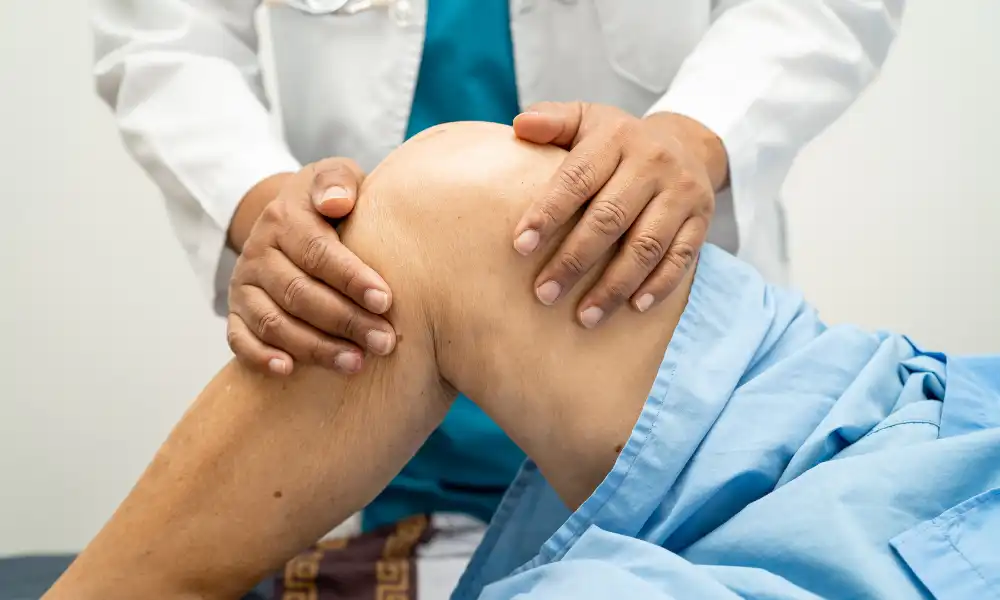
A healthcare professional or physical therapist will usually look at several factors, including how your knee moves, what activities trigger pain, and how the surrounding muscles are functioning.
Medical History Review
Your provider may ask questions such as:
- When did your knee pain start?
- Did it begin suddenly or gradually?
- Does the pain happen only on stairs or during other activities?
- Have you experienced a previous knee injury?
- Does your knee swell, click, lock, or feel unstable?
Your answers help identify patterns that may point toward specific causes, such as patellofemoral syndrome, arthritis, tendon problems, or an injury.
Movement and Physical Examination
A physical examination allows a provider to evaluate how your knee functions during movement.
The evaluation may include:
- Knee range of motion testing
- Muscle strength assessment
- Balance evaluation
- Walking and movement analysis
- Joint stability testing
A physical therapist may also examine your hips, ankles, and posture because problems in other areas can influence knee mechanics.
For example, limited hip strength or poor movement control may increase stress on the knee during stair climbing.
Imaging Tests
In some cases, imaging may be recommended to understand the condition more clearly.
Depending on your symptoms, a healthcare provider may use:
- X-rays to evaluate bone changes or arthritis
- MRI scans to examine soft tissues such as ligaments and cartilage
- Ultrasound imaging for certain tendon-related concerns
However, imaging results are only one piece of the puzzle. A person can have changes visible on an image without significant symptoms, while another person may have pain caused by movement issues that do not appear on imaging.
Knee Pain Treatment Options
The right treatment for knee pain depends on the underlying cause, how severe your symptoms are, and how your knee affects your daily activities.
For many people, conservative treatment can significantly improve pain and function.
Activity Modification
Changing the way you perform certain activities can help reduce irritation while your knee recovers.
This may include:
- Avoiding movements that sharply increase pain
- Reducing high-impact activities temporarily
- Using proper techniques during exercise
The goal is not to completely stop moving. Instead, it is about finding a balance that allows healing while maintaining strength and mobility.
Ice and Pain Management Strategies
Some people find temporary relief from strategies that help manage discomfort after activity.
Depending on your condition, options may include:
- Cold therapy
- Heat therapy
- Gentle mobility exercises
- Professional pain management guidance
It is important to choose approaches based on your specific symptoms rather than using the same method for every type of knee pain.
Physical Therapy for Knee Pain
Physical therapy is one of the most effective approaches for many causes of knee pain.
Instead of only focusing on the painful area, physical therapists evaluate how your entire movement system works together.
A customized knee rehabilitation program may focus on:
- Strengthening the muscles around the knee
- Improving flexibility
- Correcting movement patterns
- Improving balance and stability
- Returning safely to daily activities
How Physical Therapy Helps Knee Pain When Climbing Stairs
Physical therapy can be especially helpful for people who experience knee pain while climbing stairs because stair movement requires strength, coordination, and control.
A therapist can identify what is contributing to your symptoms and create exercises designed around your specific needs.
Strengthening Weak Muscles
Weak muscles around the knee and hip can increase stress on the joint.
Physical therapy often includes exercises that strengthen:
- Quadriceps muscles
- Hamstrings
- Hip muscles
- Glute muscles
- Core muscles
Improved strength helps your body distribute forces more effectively during movements like climbing stairs.
Improving Knee Movement Patterns
The way you move can influence how much stress your knee experiences.
A physical therapist may help you improve:
- Stair climbing technique
- Squatting mechanics
- Walking patterns
- Balance and coordination
Small adjustments in movement can sometimes make a significant difference in comfort.
Increasing Flexibility and Mobility
Tight muscles or restricted joint movement can affect how the knee functions.
Mobility exercises may help improve comfort and allow smoother movement during daily activities.
How to Prevent Knee Pain When Climbing Stairs
Preventing knee pain involves supporting the structures that keep your knee strong, flexible, and stable.
Build Leg Strength Gradually
Strong muscles help protect the knee joint.
However, increasing exercise intensity too quickly can overload your tissues.
Whether you are starting a fitness program or returning after an injury, gradual progression is important.
Maintain Healthy Movement Habits
Good movement habits reduce unnecessary stress on your knees.
This includes:
- Using proper form during exercise
- Avoiding sudden increases in activity
- Maintaining good posture
- Listening to your body’s warning signs
Stay Active
Regular movement helps maintain joint mobility and muscle strength.
Low-impact activities such as walking, swimming, or controlled strengthening exercises can support healthy knee function.
Knee Pain Treatment in Houston
If you are searching for knee pain treatment in Houston, finding the cause of your discomfort is an important first step.
At Absolute Physical Therapy, treatment focuses on personalized care designed to improve movement, reduce pain, and help patients return to the activities they enjoy.
Knee pain caused by conditions like patellofemoral syndrome, arthritis, overuse injuries, or muscle weakness may respond well to targeted rehabilitation.
A customized therapy plan may include:
- Strengthening exercises
- Mobility training
- Movement correction
- Functional activity training
- Education for long-term knee health
Whether stairs have become uncomfortable because of an old injury, gradual changes, or weakness around the knee, professional guidance can help you understand your options.
You do not have to simply accept ongoing knee pain as part of everyday life. The right approach can help improve confidence, mobility, and quality of movement.
Frequently Asked Questions About Knee Pain When Climbing Stairs
Why does my knee hurt when I go upstairs but not when I walk?
Stairs require more knee bending and muscle effort than walking on flat ground. This increased demand can reveal problems such as patellofemoral syndrome, weakness, arthritis, or movement issues.
Is climbing stairs bad for your knees?
For healthy knees, climbing stairs is generally a normal activity. However, if you have an underlying knee problem, stairs may increase discomfort because they place more stress on the joint.
What is the most common cause of knee pain when climbing stairs?
One of the most common causes is patellofemoral syndrome, which involves irritation around the kneecap. Arthritis, muscle weakness, and previous injuries can also contribute.
Can physical therapy fix knee pain?
Physical therapy can help many people with knee pain by improving strength, mobility, and movement patterns. The results depend on the underlying cause of the pain.
Should I stop exercising if my knee hurts on stairs?
You may need to modify certain activities, but completely stopping movement is not always helpful. A healthcare professional can recommend safe exercises based on your condition.
How do I know if my knee pain is arthritis?
Arthritis-related knee pain often includes stiffness, swelling, aching discomfort, and pain that increases with activity. A professional evaluation can help determine the cause.
When should I see a physical therapist for knee pain?
You should consider seeing a physical therapist if knee pain affects your daily activities, continues despite rest, limits movement, or makes activities like stairs difficult.
Medical Disclaimer: This article is for informational purposes only and does not replace professional medical advice, diagnosis, or treatment. If you have persistent knee pain or concerns about your symptoms, consult a qualified healthcare provider.