
You’re crushing your workout routine, making steady progress, and then it happens — a sharp twinge in your shoulder during a set.
Or maybe it’s a dull ache that’s been building for weeks, making every pressing movement uncomfortable. If you’ve been asking yourself “why does my shoulder hurt when I lift weights,” you’re not alone. Shoulder pain from lifting weights is one of the most common complaints we hear from gym-goers at our Houston clinic.
The shoulder is an incredibly mobile joint, which makes it vulnerable to injury when subjected to repetitive stress, heavy loads, or improper technique. Whether you’re dealing with a rotator cuff injury weightlifting strain, shoulder impingement lifting complications, or simple muscle strain shoulder pain, knowing the signs and seeking proper treatment can make all the difference.
Let’s explore the most common causes of shoulder pain in gym settings, how to identify what type of injury you might have, when to seek professional help, and how physical therapy can get you back to lifting safely and effectively.
Why Does My Shoulder Hurt When I Lift Weights?
Understanding the root cause of your shoulder discomfort is essential for proper recovery. The shoulder joint is complex, involving bones, muscles, tendons, and ligaments working together. When any of these structures become overloaded or damaged, pain follows. Here are the most common culprits behind gym injuries shoulder pain.
Rotator Cuff Injury Weightlifting Strains and Tears
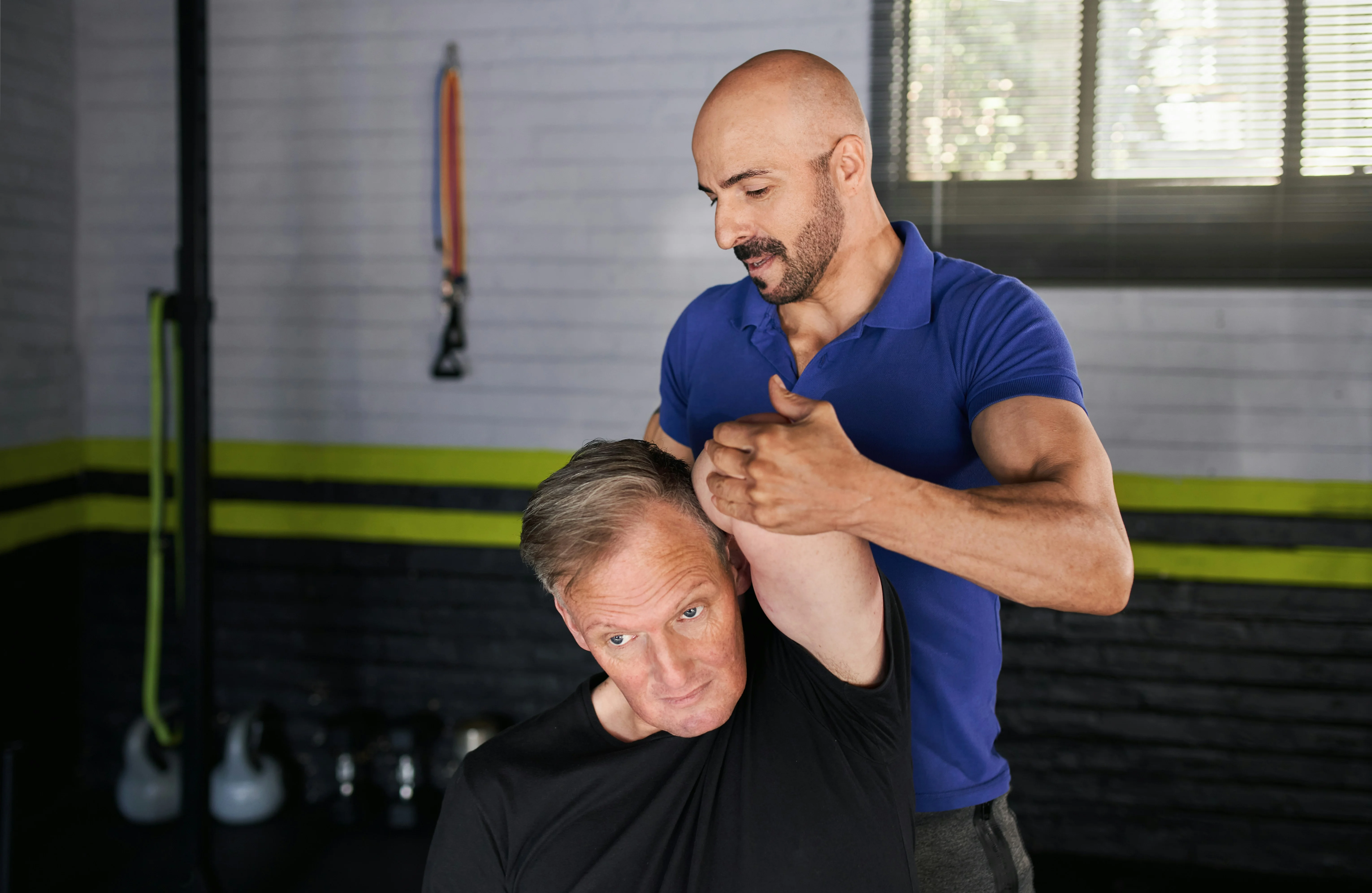
The rotator cuff consists of four muscles and their tendons that stabilize your shoulder joint and allow for a wide range of motion. When you lift weights — especially with overhead movements like military presses, lateral raises, or even heavy rows — these muscles can become strained or even torn. A rotator cuff injury weightlifting incident often starts with minor inflammation but can progress to partial or complete tears if ignored.
Signs of a rotator cuff injury include weakness when lifting your arm away from your body, pain that radiates down the upper arm, and difficulty sleeping on the affected shoulder. These injuries are particularly common among people who increase their training volume too quickly or who favor pushing exercises without balancing them with pulling movements that strengthen the posterior shoulder.
Shoulder Impingement Lifting from Overhead Movements
Shoulder impingement occurs when the tendons of the rotator cuff become compressed or pinched between the bones of the shoulder during movement. This condition is especially prevalent among weightlifters who perform frequent overhead pressing, pull-ups, or Olympic lifts. When you raise your arm, the space where these tendons pass through narrows, and repetitive compression leads to inflammation and pain.
Shoulder impingement lifting typically causes pain on the outside or front of the shoulder, particularly when raising your arm above shoulder height. You might notice the pain intensifies during overhead movements but improves when your arm is at rest. Poor shoulder blade mechanics and tight chest muscles often contribute to this condition, as they alter the normal movement patterns of the shoulder joint.
Muscle Strain Shoulder Pain from Overtraining
Sometimes the cause is straightforward — you’ve simply done too much, too soon. Muscle strain shoulder pain occurs when the muscle fibers are overloaded beyond their capacity, leading to microscopic tears and inflammation. This commonly happens when you increase weight, volume, or training frequency without allowing adequate recovery time.
Unlike rotator cuff tears or impingement, muscle strains typically feel like a general soreness or tightness across the shoulder muscles, particularly the deltoids. The pain usually develops gradually over several workouts rather than from a single incident. While muscle strains are generally less serious than tendon or joint injuries, they still require proper rest and rehabilitation to prevent them from becoming chronic issues.
Poor Form and Technique During Exercises
Perhaps the most preventable cause of shoulder pain from lifting weights is using improper technique. When your form breaks down — whether due to lifting too heavy, fatigue, or simply not knowing the correct movement pattern — your shoulder joint takes stress it wasn’t designed to handle. Common form mistakes include flaring the elbows excessively during bench press, allowing the shoulders to roll forward during rows, or using momentum instead of controlled movement.
Poor form doesn’t just increase injury risk in the moment; it creates compensatory movement patterns that put chronic stress on the shoulder structures. Over time, these faulty patterns lead to muscle imbalances, where some muscles become overdeveloped while others remain weak. This imbalance further destabilizes the shoulder joint and sets the stage for more serious injuries down the line.
How to Identify the Type of Shoulder Injury You Have
Pinpointing the exact nature of your shoulder problem helps determine the best course of action. While a professional assessment is always recommended, understanding the different types of pain and symptoms can give you valuable insight into what’s happening in your shoulder.
Pay attention to when the pain occurs, what it feels like, and how it affects your movement.
Sharp Pain During Specific Movements Like Bench Press
If you experience sudden, sharp pain during particular exercises — especially shoulder pain after bench press or overhead pressing — this often indicates an acute issue with a specific structure. Sharp pain that strikes during the movement and subsides afterward typically points to tendon irritation, impingement, or a minor tear.
The pain might feel like a stabbing sensation in a precise location, such as the front of the shoulder during the bottom of a bench press or the top of the shoulder during lateral raises.
This type of pain is your body’s immediate warning system telling you that a structure is being stressed beyond its capacity. Continuing to push through sharp pain almost always makes the problem worse, potentially turning a minor issue into a major injury requiring months of recovery.
Dull Aching Pain That Worsens Over Time
A persistent, dull ache in the shoulder that gradually intensifies over days or weeks suggests chronic overuse or inflammation. This type of discomfort might not stop you from completing your workout in the moment, but you’ll notice it lingering afterward — during rest periods, at night, or first thing in the morning. The pain may start as a mild annoyance but progressively worsens if you don’t address the underlying cause.
Dull, aching pain often accompanies tendinitis, bursitis, or early-stage rotator cuff problems. The inflammation builds up over time as you continue to stress the affected tissues without adequate recovery. Many people make the mistake of working through this type of pain, assuming it will eventually go away on its own, only to find themselves facing a more serious injury several weeks later.
Limited Range of Motion and Stiffness
When your shoulder becomes stiff and you can’t move it through its full range of motion — particularly when reaching overhead, behind your back, or across your body — this indicates either significant inflammation or structural damage. You might notice difficulty putting on a jacket, reaching for items on high shelves, or achieving proper position during exercises that were previously easy.
Limited range of motion often accompanies rotator cuff injuries, severe impingement, or adhesive capsulitis (frozen shoulder). The stiffness may be most pronounced in the morning and improve slightly throughout the day as you move around. However, if you’re unable to achieve normal shoulder positions even after warming up, it’s a sign that professional intervention is needed to prevent permanent mobility loss.
Clicking, Popping, or Grinding Sensations
Hearing or feeling clicks, pops, or grinding (called crepitus) in your shoulder during movement can be alarming, though it’s not always a sign of serious injury. Occasional, painless popping is often harmless and related to gas bubbles in the joint fluid or tendons moving over bony structures. However, clicking accompanied by pain, weakness, or catching sensations typically indicates a mechanical problem within the joint.
Painful clicking might suggest labral tears, cartilage damage, or tendon instability. If you feel like your shoulder is catching or getting stuck during certain movements, or if the grinding sensation is accompanied by pain, these are red flags that warrant a professional evaluation. These symptoms suggest that structures within the joint are not moving smoothly, which can lead to accelerated wear and tear if not addressed.
When to Seek Professional Help for Gym Injuries Shoulder Pain
Knowing when to push through minor discomfort and when to seek help can be the difference between a quick recovery and a prolonged injury. While some soreness after training is normal, certain warning signs indicate you need professional assessment and treatment. Here’s when you should stop trying to self-manage and reach out to a pain management specialist or physical therapist.
Pain That Persists Beyond a Few Days of Rest
If you’ve taken a break from training, modified your workouts, and the pain hasn’t improved after several days, it’s time to seek help. Acute muscle soreness from a tough workout should resolve within 72 hours with adequate rest. When pain lingers beyond this window — especially if it’s not improving or is getting worse — you’re likely dealing with more than simple muscle fatigue.
Persistent pain suggests inflammation, tissue damage, or a mechanical issue that won’t resolve on its own. Many people waste weeks or even months hoping the problem will magically disappear, only to find themselves further from their fitness goals and dealing with a more complicated injury. Early intervention through physical therapy can address the problem before it becomes chronic.
Inability to Lift Your Arm or Perform Daily Activities
When shoulder pain interferes with basic daily activities—like reaching into a cabinet, washing your hair, or carrying groceries—you’ve crossed into territory that requires professional attention. Your shoulder should allow you to perform these fundamental movements without significant difficulty or pain. If you find yourself compensating or avoiding certain movements in your daily life, not just during workouts, the injury has progressed beyond something you can manage independently.
This level of functional limitation often indicates significant inflammation, muscle weakness, or structural damage. Waiting too long to address these symptoms can lead to compensatory patterns in other areas of your body, potentially causing a cascade of problems in your neck, opposite shoulder, or back.
Sudden Injury with Immediate Sharp Pain
If you felt a sudden pop, tear, or sharp pain during a specific lift, stop immediately and seek evaluation. Acute injuries — where you can pinpoint the exact moment something went wrong — often involve tears in muscles, tendons, or ligaments. Unlike gradual overuse injuries, acute trauma may require different treatment approaches and sometimes even surgical intervention if the tear is severe.
Don’t attempt to “work through” an acute injury or wait to see if it improves. The sooner you get an accurate diagnosis, the sooner you can begin appropriate treatment and the better your chances of a full recovery. What might be a repairable issue in the first few days can become a chronic problem if left untreated.
Recurring Shoulder Issues Despite Rest and Modification
Perhaps the most frustrating scenario is when shoulder pain keeps coming back no matter how much you rest or modify your training. You take time off, feel better, return to the gym, and within a few sessions, the pain returns. This cycle of pain-rest-return-pain indicates an underlying biomechanical issue, weakness pattern, or movement dysfunction that needs to be identified and corrected.
Recurring injuries rarely resolve without addressing the root cause. There’s usually a reason your shoulder keeps getting injured—whether it’s muscle imbalances, poor movement patterns, inadequate mobility, or training programming errors. A comprehensive evaluation can uncover these underlying factors and create a plan to break the injury cycle for good.
Why Does My Shoulder Hurt When I Lift Weights? Get Physical Therapy Support Today
At Absolute Physical Therapy and Fitness, we understand that getting back to your training goals safely is your priority. Our one-on-one approach ensures you receive personalized attention and a recovery plan designed specifically for your needs.
Whether you’re dealing with a rotator cuff injury weightlifting strain, shoulder impingement lifting complications, or any other gym injuries shoulder pain, we’re here to help you recover and return to the activities you love.
Don’t let shoulder pain keep you from reaching your fitness goals. Understanding why your shoulder hurts when you lift weights is the first step, but taking action is what leads to real results. If you’re experiencing persistent shoulder pain, limited mobility, or recurring issues despite rest, it’s time to get professional help.
Book an appointment with our team today and start your journey back to pain-free training and optimal performance.