
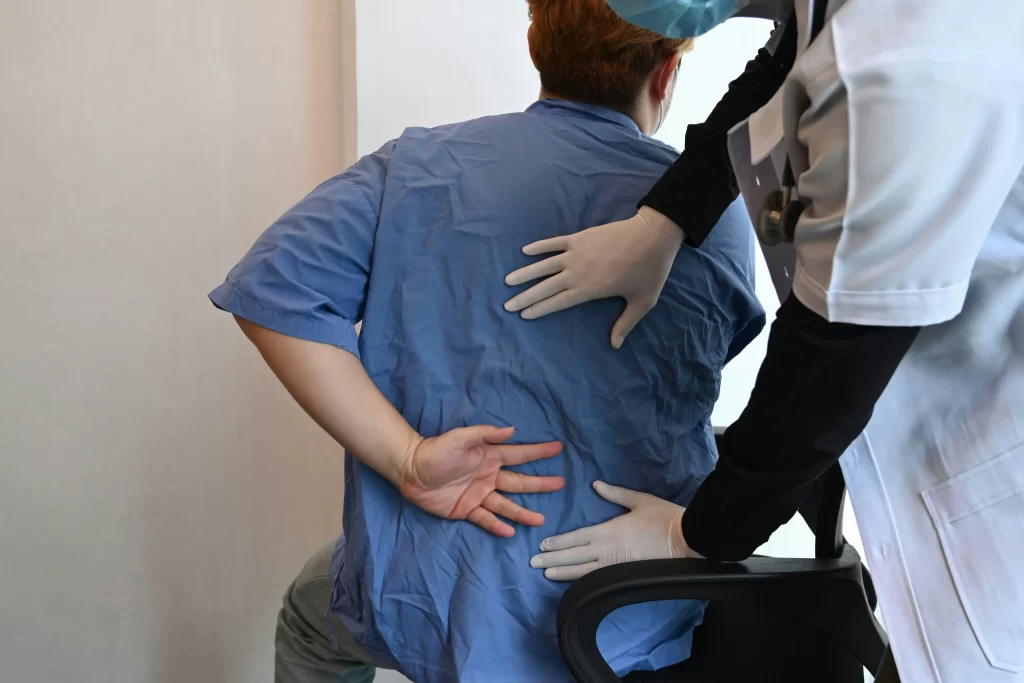
Sciatic pain in your buttocks can stop you in your tracks. That sharp, shooting sensation that radiates from your lower back through your buttock and down your leg isn’t just uncomfortable — it can make sitting, standing, and even sleeping nearly impossible.
If you’re dealing with this type of pain, you’re not alone. Millions of Americans experience sciatica each year, and understanding what’s causing your discomfort is the first step toward finding relief. But what causes sciatic pain in buttocks?
Let’s break down the common causes of sciatic nerve pain, help you recognize the symptoms, and explain when it’s time to seek professional help.
Related: What Is the Zink Compensatory Pattern and How Does It Affect Your Body?
What Is Sciatic Nerve Pain and Why Does It Affect Your Buttocks?
The sciatic nerve is the longest and thickest nerve in your body. It runs from your lower back, through your buttocks, and down each leg to your feet. When this nerve becomes compressed or irritated, you experience what’s commonly known as sciatica.
How the Sciatic Nerve Travels Through Your Lower Body
Your sciatic nerve starts at your lower spine, where five nerve roots come together. From there, it passes deep through your buttock — right near the piriformis muscle — and continues down the back of your thigh.
This pathway explains why problems in your lower back can cause pain in your buttocks, and why buttock pain often radiates down your leg. The nerve’s long route means compression at any point can trigger symptoms throughout the entire pathway.
Why Compression in the Buttocks Region Causes Radiating Pain
When something presses against your sciatic nerve in the buttocks area, it sends pain signals along the entire nerve pathway. Think of it like stepping on a garden hose — the pressure at one point affects the flow throughout the entire length.
This compression can come from tight muscles, inflamed tissues, or structural problems in your spine. The buttocks region is particularly vulnerable because the nerve passes through a narrow space surrounded by muscles, bones, and other tissues.
The Connection Between Your Spine and Buttock Discomfort
Most sciatic nerve pain actually starts in your lower back, not your buttocks. Problems with your spinal discs, vertebrae, or nerve roots can send pain signals that you feel primarily in your buttock area.
This is called referred pain, and it’s why addressing only the buttock symptoms without treating the underlying spinal issue rarely provides lasting relief.
What Causes Sciatic Pain in Buttocks?
Understanding what causes sciatic pain in buttocks helps you and your healthcare provider create an effective treatment plan. Several conditions can lead to sciatic nerve compression, and each requires a slightly different approach to pain management.
Herniated or Bulging Discs Pressing on Nerve Roots
Herniated discs are one of the most common causes of sciatica. Your spinal discs act as cushions between your vertebrae, and when the soft inner material pushes through the outer layer, it can press directly on your sciatic nerve roots.
This pressure irritates the nerve and sends pain signals through your buttock and down your leg. Disc problems often develop gradually due to age-related wear and tear, but they can also happen suddenly from injury or strain.
Piriformis Syndrome and Muscle-Related Compression
Piriformis syndrome occurs when the piriformis muscle in your buttock becomes tight or spasms, compressing the sciatic nerve that runs underneath or through it. This condition accounts for a significant portion of sciatica in buttocks cases.
The piriformis muscle helps rotate your hip and turn your leg outward. When it’s overworked, injured, or chronically tight, it can squeeze the sciatic nerve and create pain that feels deep in your buttock. This type of sciatic nerve pain causes can be particularly frustrating because the source is muscular rather than structural.
Spinal Stenosis Narrowing the Nerve Pathway
Spinal stenosis is a narrowing of the spaces in your spine where nerves travel. This condition typically develops as you age and is more common in adults over 50.
When the spinal canal narrows, it puts pressure on the nerve roots that form your sciatic nerve. This creates lower back and buttock pain that often worsens with standing or walking and improves when you sit or lean forward.
Degenerative Disc Disease Creating Nerve Irritation
Degenerative disc disease isn’t actually a disease — it’s a natural part of aging where your spinal discs lose height and flexibility. As discs degenerate, they provide less cushioning between vertebrae.
This can lead to nerve irritation in several ways: the discs themselves can bulge and press on nerves, the reduced height can narrow the spaces where nerves exit your spine, and the instability can cause inflammation around nerve roots. All of these issues can trigger sciatic nerve compression that radiates into your buttocks.
How to Recognize Sciatica Symptoms in Your Buttocks

Knowing the typical sciatica symptoms helps you identify when you’re dealing with nerve pain rather than a simple muscle strain. Sciatica has distinct characteristics that set it apart from other types of buttock pain.
Sharp, Shooting Pain That Radiates Down Your Leg
The hallmark of sciatica is a sharp, electric-like pain that starts in your lower back or buttock and shoots down your leg. This pain typically affects only one side of your body.
The pain might feel like a severe leg cramp, a jolt of electricity, or a burning sensation. It often intensifies when you cough, sneeze, or sit for extended periods, and you might find yourself constantly shifting positions to find relief.
Numbness or Tingling in the Buttock and Thigh
Along with pain, you might experience numbness, tingling, or a “pins and needles” sensation in your buttock, hip, or leg. This happens because nerve compression interferes with normal nerve signaling.
Some people describe this feeling as if their leg has “fallen asleep” but won’t wake up. The numbness might come and go or remain constant, depending on the severity of the compression.
Burning Sensations When Sitting or Standing
Many people with sciatica report a deep, burning pain in their buttock that worsens with certain positions. Sitting, especially on hard surfaces, often aggravates the pain because it increases pressure on the sciatic nerve.
Standing after sitting for a while can also trigger intense pain as the nerve adjusts to the position change. You might find yourself avoiding activities you once enjoyed simply because the pain makes them unbearable.
Muscle Weakness That Affects Your Mobility
In more severe cases, sciatic nerve compression can cause weakness in your leg or foot. You might notice difficulty standing on your toes, lifting your foot, or maintaining your balance.
This weakness occurs because the compressed nerve can’t properly transmit signals to your muscles. If you’re experiencing significant weakness, it’s important to seek evaluation from a physical therapy professional to prevent further complications.
When Should You Seek Professional Help for Sciatic Nerve Compression?

While mild sciatica sometimes resolves on its own with rest and home care, certain situations require professional intervention. Knowing when to seek help can prevent complications and speed your recovery.
Pain That Lasts Longer Than a Few Weeks
If your buttock pain persists for more than a few weeks despite rest and over-the-counter pain relief, it’s time to consult a healthcare provider. Chronic pain indicates that the underlying cause isn’t resolving on its own.
Early intervention with services like physical therapy can prevent acute sciatica from becoming a chronic condition. A qualified therapist can identify the specific cause of your sciatic nerve pain and create a treatment plan tailored to your needs.
Difficulty Walking or Performing Daily Activities
When sciatica interferes with your ability to work, exercise, or complete everyday tasks, professional treatment becomes essential. You shouldn’t have to live with pain that limits your lifestyle.
The sooner you address the problem, the better your chances of a full recovery.
Loss of Bladder or Bowel Control (Medical Emergency)
While rare, loss of bladder or bowel control accompanied by sciatic pain indicates a serious condition called cauda equina syndrome. This is a medical emergency requiring immediate attention.
Other red flags include sudden, severe weakness in both legs, numbness in your inner thighs or buttocks (saddle anesthesia), or progressive neurological symptoms. If you experience any of these, seek emergency medical care right away.
Get Relief from Sciatica in Buttocks at Absolute Physical Therapy and Fitness
You don’t have to live with the frustration and limitations of sciatic nerve pain. At Absolute Physical Therapy and Fitness, we specialize in identifying the root cause of your sciatica in buttocks and creating personalized treatment plans that provide lasting relief.
Our experienced team uses a combination of manual therapy, targeted exercises, and pain management techniques to reduce compression on your sciatic nerve, improve your mobility, and prevent future flare-ups. We understand that every patient’s situation is unique, which is why we take the time to thoroughly evaluate your condition and design a treatment approach specifically for you.
Whether your pain stems from piriformis syndrome, a herniated disc, or another underlying issue, we’ll work with you one-on-one to help you regain your quality of life. Our post-surgical rehab expertise also means we can support you through recovery if surgery becomes necessary.
Ready to find relief from your lower back and buttock pain? Contact us today to schedule your initial evaluation or call to book your appointment. Let’s work together to get you back to the activities you love, pain-free.