
Close your eyes right now and try standing on one foot. Feel that immediate wobble? That’s your body revealing just how to improve balance with eyes closed can transform your stability and confidence. Most people rely heavily on vision for balance, but the real magic happens when you train your other sensory systems to take control.
Balance training eyes closed develops stronger body awareness, enhances coordination, and builds the type of reliable stability that keeps you steady in any situation. Whether you’re navigating a dark hallway, walking on uneven terrain, or simply want to feel more confident in your daily movements, learning how to improve balance with eyes closed opens up a world of improved stability and performance.
Why Balance Training with Eyes Closed Matters

Enhanced Proprioception and Body Awareness Development
Proprioception exercises with eyes closed strengthen your body’s internal GPS system by forcing your joints, muscles, and ligaments to communicate more effectively with your brain. When vision isn’t available to guide your movements, these internal sensors must work harder to provide accurate position information, leading to enhanced body awareness and superior movement control.
This improved body awareness translates directly into better coordination during sports, increased confidence during daily activities, and enhanced stability when walking in challenging environments. Understanding how to improve balance with eyes closed helps your body learn to trust its internal systems, creating more reliable balance that doesn’t depend on perfect lighting or clear visual conditions.
Improved Fall Prevention and Safety Confidence
Training your balance systems without visual input specifically prepares your body for real-world scenarios where falls commonly occur. Dark hallways, uneven sidewalks, and moments of distraction become far less threatening when your body has learned to maintain stability through multiple sensory pathways rather than relying solely on vision.
Building this type of comprehensive balance control creates genuine confidence in your stability abilities. You’ll move through your day knowing that mastering how to improve balance with eyes closed provides the skills to keep you upright and steady, regardless of lighting conditions or environmental challenges you might encounter.
Better Athletic Performance and Daily Movement Quality
Athletes who master eye-closed balance exercises for beginners and progress to advanced training often discover improvements in reaction time, movement precision, and overall performance. When your balance systems function optimally without visual input, they work even more effectively when vision is available, creating superior stability for all activities.
This enhanced performance extends beyond athletics to everyday movements like climbing stairs while carrying packages, navigating crowded spaces, or maintaining stability while multitasking. The improved neuromuscular control creates more efficient movement patterns that make all activities feel smoother and more controlled.
What Happens When You Close Your Eyes During Balance

Your Visual System No Longer Compensates for Instability
Vision typically provides steady input for balance control, and when you eliminate this information source during exercises, you create an opportunity for your other balance systems to strengthen and develop. Without visual reference points, even small balance disturbances become more noticeable, challenging your internal systems to become more responsive and accurate.
The initial unsteadiness you experience represents your nervous system actively learning to process and respond to non-visual balance information more effectively. This challenge creates the adaptation your body needs to develop truly reliable balance control.
Proprioceptive and Vestibular Systems Take Over Balance Control
With vision removed, your proprioceptive system which includes sensors throughout your muscles, joints, and ligaments must provide detailed information about body position and movement. Your vestibular system in the inner ear simultaneously becomes more active in detecting head position and movement changes, working together to maintain upright posture.
This increased cooperation between internal systems creates stronger neural connections and more sophisticated balance responses. Your brain becomes increasingly skilled at integrating information from these sources, leading to faster and more accurate balance corrections that function reliably in any environment.
Your Brain Learns to Process Non-Visual Balance Information
Consistent practice with eyes-closed exercises allows your brain to become more efficient at processing balance information from internal sources. This improvement involves creating new neural pathways and strengthening existing connections between sensory input and motor responses, leading to enhanced overall balance capabilities.
The learning process develops your brain’s ability to maintain stability through multiple sensory channels, creating backup systems that ensure reliable balance control whether you’re moving with eyes open or closed. This enhanced processing benefits all balance-related activities throughout your daily life.
How to Assess Your Current Eyes-Closed Balance Ability
Simple Standing Balance Test with Timing
Begin your assessment with a basic two-foot standing test to establish your baseline eyes-closed balance ability. Stand with your feet hip-width apart on a firm, level surface, and time how long you can maintain steady balance with your eyes closed. This simple test provides valuable insight into your current balance capabilities and helps identify areas for improvement.
During this test, observe the direction and intensity of any movement you experience. Small amounts of natural sway are completely normal, while excessive movement or difficulty maintaining the position may indicate opportunities to enhance your balance through targeted physical therapy approaches.
Record your results and note any patterns you observe, such as consistent movement in one direction or varying stability on different days. This baseline information helps you track progress over time and celebrate improvements in your balance development journey.
Single-Leg Balance Assessment Protocol
Progress to single-leg balance eyes closed assessment for more detailed information about your balance capabilities. Start by attempting to balance on your dominant leg with eyes closed, timing how long you can maintain the position before needing to return your other foot to the ground.
Test both legs separately, as differences between sides can reveal specific areas where focused training might be beneficial. This detailed assessment provides valuable information for creating targeted improvement programs that address your unique balance patterns and challenges.
Document your results and note specific sensations you encounter, such as ankle movement, hip adjustments, or overall steadiness. This information helps create more personalized training approaches through our comprehensive services that target your individual balance needs.
Progressive Challenge Evaluation Methods
Advanced assessment involves testing your balance under increasingly challenging conditions to identify specific situations where your eyes-closed stability changes. Try the basic standing test on different surfaces, such as a foam pad or carpet, to understand how surface variations affect your stability without visual input.
You can also evaluate dynamic balance by attempting simple movements with eyes closed, such as gentle reaching motions while standing or slow walking along a straight path. These assessments reveal functional balance capabilities that may not appear during static testing but provide insight into your real-world balance performance.
Consider working with professionals who specialize in pain management and balance training to ensure your assessments are comprehensive and appropriate for your individual needs and goals.
Examples of Beginner Eyes-Closed Balance Exercises
Two-Foot Standing Balance with Wall Support
Start your eyes-closed balance journey with the safest possible approach by positioning yourself arm’s length from a wall or sturdy surface. Stand with your feet hip-width apart and close your eyes while keeping your hands near but not touching the wall. This setup provides security while still challenging your balance systems to function without visual input.
Begin by maintaining this position for comfortable durations and gradually increase the time as your stability improves. Focus on steady, relaxed breathing and try to minimize unnecessary movement. The nearby wall support provides confidence that helps you focus on the valuable sensory feedback from your feet, legs, and core.
As comfort increases, gradually increase the distance between yourself and the wall support, eventually progressing to free-standing balance. This progression builds both physical capability and confidence, creating a solid foundation for more advanced balance improvement drills eyes closed.
Heel-to-Toe Walking Along a Straight Line
Dynamic movement patterns provide excellent preparation for real-world balance challenges. Create a straight line using tape or visualize a path, then practice walking heel-to-toe along this route with your eyes closed. Start with just a few steps and gradually increase the distance as your control develops.
This exercise challenges your ability to maintain balance while moving, which closely mimics the balance demands of daily activities. The heel-to-toe pattern creates a narrower base of support and requires precise control of each step, making it valuable for developing dynamic stability skills.
Practice this exercise in both directions and notice any natural tendencies to drift, which may indicate specific areas that could benefit from focused attention. Consider incorporating movement-based training into a comprehensive weight loss and wellness program for overall health enhancement.
Seated Balance Exercises for Safety and Confidence
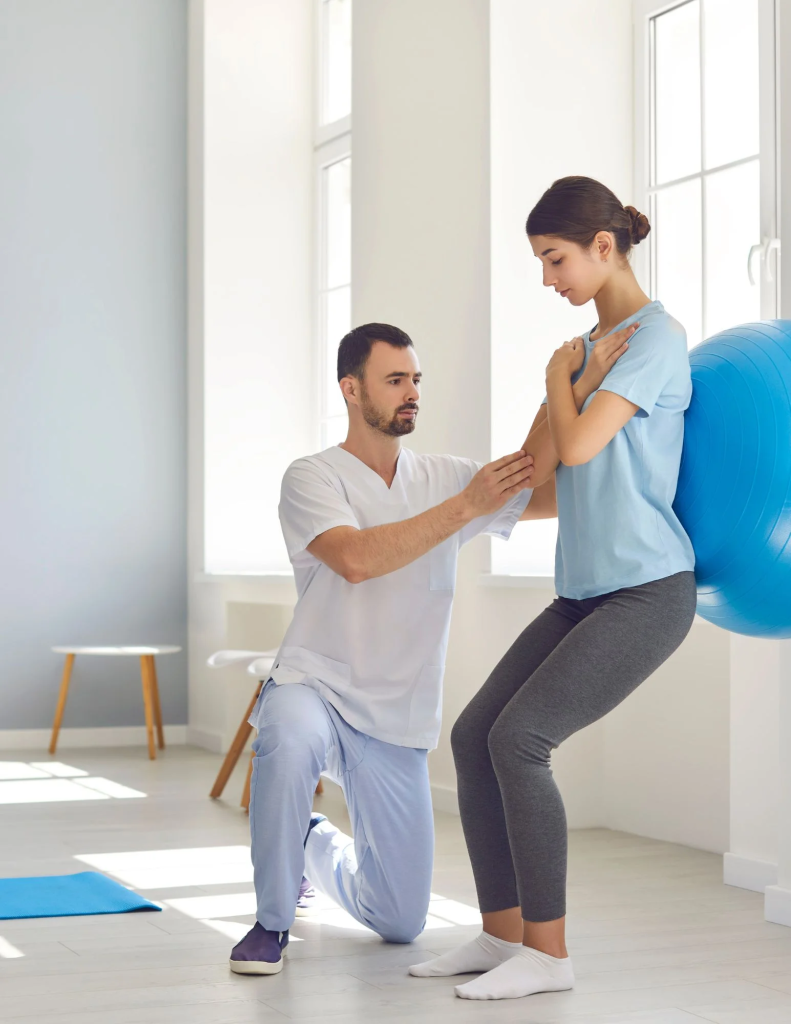
For those who prefer a gentler introduction to eyes-closed balance training, seated exercises provide safe and effective proprioceptive development. Sit on an exercise ball or unstable surface with your feet flat on the floor and practice maintaining upright posture with your eyes closed. This approach allows you to experience balance training benefits while maintaining complete safety.
Progress by gently lifting one foot slightly off the ground while maintaining your seated position with eyes closed, or by performing controlled reaching movements in different directions. These exercises develop core stability and body awareness while building confidence for eventual progression to standing activities.
Seated exercises work particularly well for individuals in post-surgical rehab programs or those who want to start their balance training journey with maximum comfort and security.
How to Progress to Advanced Balance Training
Single-Leg Standing on Different Surfaces
Once you’ve developed comfort with basic two-foot standing balance with eyes closed, single-leg standing represents excellent progression in your training development. Start on firm, level surfaces and gradually introduce different textures like foam pads, balance discs, or even outdoor surfaces like grass. Each surface change provides unique challenges that encourage your balance systems to adapt and strengthen.
Begin with comfortable durations and progress toward longer holds on each leg. Focus on quality over quantity, emphasizing smooth, controlled balance rather than simply enduring longer times. Different surfaces provide distinct benefits: soft surfaces like foam enhance ankle stability, while varied surfaces like grass challenge your adaptability to changing conditions.
Track your progress on each surface and leg separately, as improvements often become more apparent as challenges increase. This progressive approach ensures steady development while maintaining safety, making it suitable for integration into broader fitness and wellness approaches.
Dynamic Movement Patterns with Eyes Closed
Advanced balance training incorporates movement while maintaining eyes-closed stability, better preparing you for complex real-world balance situations. Practice activities like reaching in different directions while standing on one foot, performing gentle torso movements, or even simple coordination exercises like balance training patterns with eyes closed.
These dynamic patterns challenge your balance systems to maintain stability while your center of gravity shifts and your body moves through different positions. Start with slow, controlled movements and gradually develop speed and complexity as your control improves. The focus remains on maintaining quality movement patterns without visual guidance.
Consider incorporating arm movements, gentle head turns, or light coordination exercises once you’ve mastered basic dynamic balance. These progressions help develop the sophisticated balance control needed for athletic activities and complex daily tasks that require stability during position changes.
Multi-Directional Balance Challenge Combinations
Advanced eyes-closed balance training combines multiple challenges simultaneously to create comprehensive stability demands that mirror real-world situations. Try standing on one foot with eyes closed while performing simple cognitive tasks, or practice balance exercises on varied surfaces while completing coordination activities.
These combination exercises train your brain to process multiple types of information while maintaining balance without visual input. They prove particularly valuable for anyone who wants to maintain stability while multitasking during daily activities or those seeking to enhance their overall movement capabilities.
Start with simple combinations and gradually add complexity as skills develop. The goal involves developing robust vestibular rehab with eyes closed capabilities that function reliably even under challenging or multifaceted conditions. Learning how to improve balance with eyes closed through these advanced methods creates confidence and competence for any balance situation you might encounter.
Get Professional Balance Training at Absolute Physical Therapy
Ready to stop wobbling and start moving with complete confidence? You’ve learned the techniques, but imagine how much faster you could progress with expert guidance tailored specifically to your needs.
Our experienced physical therapists at Absolute Physical Therapy transform balance challenges into strength-building opportunities through personalized training programs that are both safe and remarkably effective. We don’t use one-size-fits-all approaches—instead, we create comprehensive treatment plans that address your unique balance goals, lifestyle demands, and physical capabilities.
Whether you’re recovering from an injury, preparing for surgery, seeking fall prevention strategies, or simply want to move through life with greater stability and confidence, we’re here to guide every step of your balance training journey. Contact us today to schedule your comprehensive balance assessment and discover how professional guidance can accelerate your path to steady, reliable balance that enhances every aspect of your daily life.