
Being bedridden for an extended period can leave your legs feeling weak, unsteady, and unable to support your weight the way they once did.
Whether you’ve been recovering from surgery, dealing with a serious illness, or healing from an injury, the loss of leg strength can feel overwhelming. You might wonder if you’ll ever walk normally again or regain the independence you once had.
The good news is that with the right approach, patience, and professional guidance, you can rebuild your leg strength and get back to the activities you love. Understanding how you can strengthen your legs after being bedridden first starts with knowing why your muscles weakened in the first place and what steps you can take to safely regain your strength. Let’s dive into it!
Related: When to See a Physical Therapist
How Can I Strengthen My Legs After Being Bedridden? Why Leg Strength Declines During Bed Rest
Muscle Atrophy Begins Within Days of Immobility
Your muscles need regular movement and weight-bearing activity to maintain their size and strength. When you’re bedridden, your leg muscles stop receiving the signals and stress they need to stay strong. Muscle loss can begin in as little as 48 hours of complete bed rest, with significant atrophy occurring within just one to two weeks.
Reduced Blood Circulation Weakens Muscle Tissue
When you’re lying down for extended periods, blood flow to your legs decreases significantly. This reduced circulation means less oxygen and fewer nutrients reach your muscle tissues, which slows down the healing process and contributes to muscle weakness.
Poor circulation can also lead to swelling in your legs and feet, making it even harder to begin moving again.
Loss of Bone Density Affects Overall Leg Function
Bed rest also impacts your bones. Without the stress of weight-bearing activities like standing and walking, your bones begin to lose density. This can make your legs feel fragile and increase your risk of fractures or injuries when you start moving again.
The combination of weak muscles and weaker bones creates a challenging situation that requires careful, progressive strengthening.
Nervous System Changes Impact Muscle Activation
Your nervous system controls how your muscles contract and coordinate movement. During prolonged bed rest, the neural pathways that control your leg muscles can weaken, making it harder for your brain to communicate with your legs effectively.
This is why your legs might feel clumsy or uncoordinated at first, even if you’re trying hard to move them. Retraining these neural connections is just as important as rebuilding muscle strength.
How to Safely Begin Strengthening Your Legs
When you’re ready to start rebuilding leg strength, the key is to progress gradually and safely. Pushing too hard too fast can lead to injury, setbacks, or excessive fatigue that delays your recovery.
Start with Gentle Range-of-Motion Exercises in Bed
Before you even think about standing, begin with simple movements while still lying down. These exercises help wake up your muscles, improve circulation, and prepare your body for more challenging activities.
You can point and flex your feet, rotate your ankles in circles, and gently bend and straighten your knees while lying on your back. These movements might seem small, but they’re essential for reactivating muscles that haven’t been used in a while.
Progress to Assisted Sitting and Standing Movements
Once you’ve built some basic movement back into your legs, the next step is working on sitting at the edge of your bed with your feet on the floor.
This position allows your legs to bear some weight while still providing support. From there, you can practice standing with assistance, holding onto a bed rail, sturdy furniture, or having someone support you. Even standing for just 15-30 seconds at a time helps rebuild strength and confidence.
Use Support Tools Like Walkers or Parallel Bars
As you gain more strength, assistive devices become valuable tools for safe practice. A walker provides stability while allowing you to practice taking steps and bearing weight on your legs.
Parallel bars in a physical therapy setting offer even more support, giving you something to hold onto with both hands as you work on your balance and gait. These tools aren’t signs of weakness—they’re smart strategies for building strength safely.
Work with a Physical Therapist for Personalized Guidance
Every person’s situation is different, and what works for one patient might not be appropriate for another. A physical therapist can assess your current strength, identify any limitations or concerns, and create a customized plan that matches your specific needs and goals.
They can also monitor your progress, adjust exercises as you improve, and ensure you’re using proper form to prevent injury. Professional guidance is especially important if you’ve been bedridden due to surgery, stroke, or other serious medical conditions.
What Exercises Rebuild Leg Strength Most Effectively
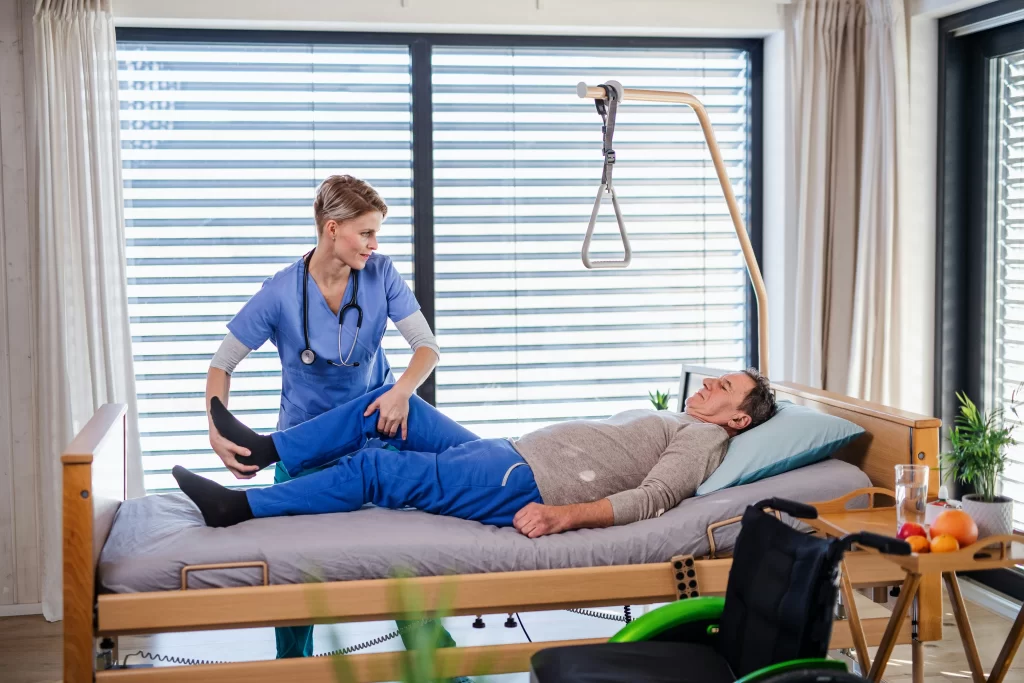
Once you’re able to answer “How can I strengthen my legs after being bedridden?,” the next step is learning which specific exercises will give you the best results!
These movements target different muscle groups and functions that are essential for walking, standing, and daily activities.
Ankle Pumps and Foot Circles for Circulation
These simple exercises can be done even while lying in bed and are perfect for getting blood flowing back into your legs. To perform ankle pumps, point your toes away from you, then flex them back toward your shins, repeating this motion 10-15 times.
For foot circles, rotate your ankle clockwise and counterclockwise. These movements help reduce swelling, prevent blood clots, and begin reactivating the muscles in your lower legs and calves.
Straight Leg Raises to Activate Quadriceps
Your quadriceps are the large muscles on the front of your thighs, and they’re crucial for standing, walking, and climbing stairs. To perform a straight leg raise, lie on your back with one leg bent and the other straight.
Tighten the muscles on top of your straight leg and slowly lift it about 6-12 inches off the bed, hold for a few seconds, then lower it back down. Start with 5-10 repetitions per leg and gradually increase as you get stronger.
Seated Marching to Improve Hip Flexor Strength
Once you’re able to sit comfortably in a chair, seated marching is an excellent exercise for building hip flexor strength and improving coordination.
Sit up straight with your feet flat on the floor, then slowly lift one knee toward your chest as high as comfortable, then lower it back down. Alternate between legs in a slow, controlled marching motion. This exercise also helps with the coordination needed for walking.
Mini Squats and Chair Stands for Functional Movement
Chair stands are one of the most functional exercises you can do because they directly mimic the movement of standing up from a seated position — something you do many times throughout the day. Start by sitting in a sturdy chair, then use your leg muscles to push yourself up to standing while lightly touching a counter or walker for balance.
Lower yourself back down slowly and with control. Even if you need to push off with your arms at first, keep practicing and gradually reduce how much arm support you use.
Balance and Stability Training to Prevent Falls
Rebuilding strength is only part of the equation — you also need to retrain your balance and coordination to move safely. Simple balance exercises include standing near a counter or wall and practicing standing on one leg for a few seconds, or walking heel-to-toe in a straight line.
These exercises help retrain the neural pathways that control balance and can significantly reduce your risk of falls as you become more mobile.
How Can I Strengthen My Legs After Being Bedridden?: When to Expect Progress in Your Recovery
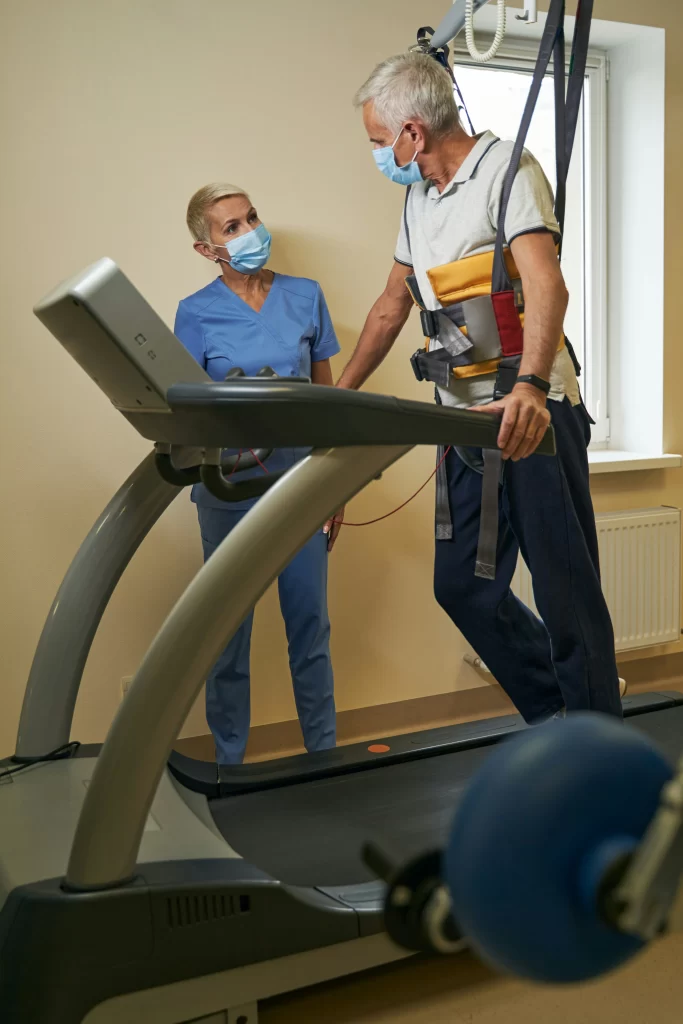
One of the most common questions people ask after asking “how can I strengthen my legs after being bedridden?” is, “How long will this take?” While everyone’s timeline is different, understanding general patterns can help set realistic expectations.
Week-by-Week Milestones for Leg Strength Recovery
In the first week or two of active rehabilitation, you might notice improved circulation, reduced swelling, and the ability to move your legs more easily in bed. By weeks three to four, many patients can progress to assisted standing and taking a few steps with support. After four to six weeks of consistent work, you should see measurable improvements in strength, balance, and endurance.
However, if you were bedridden for several months, full recovery might take three to six months or longer. According to the National Institute on Aging, older adults may need additional time to rebuild strength, but with consistency, significant improvements are possible at any age.
Signs Your Muscles Are Responding to Exercise
You’ll know your pain management and strengthening program is working when you notice certain positive changes. Your legs might feel firmer to the touch as muscle mass returns. You’ll be able to stand longer without fatigue, walk farther distances, or perform exercises with better control and less effort.
You might also notice that activities like getting in and out of chairs or cars become easier. These improvements might be gradual, but they’re important indicators that your body is responding to your efforts.
How Age and Health Conditions Affect Recovery Timeline
It’s important to acknowledge that your age, overall health, and the reason you were bedridden all influence how quickly you’ll recover. Younger patients with fewer health complications typically regain strength faster than older adults or those with chronic conditions like diabetes, heart disease, or neurological disorders.
If you underwent major surgery or experienced a serious illness, your recovery might be slower because your body is healing on multiple levels. This doesn’t mean you can’t recover — it just means you need to be patient with yourself and work closely with healthcare professionals who understand your specific situation.
Get Expert Support for Safe, Effective Leg Strengthening at Absolute Physical Therapy and Fitness
Rebuilding leg strength after being bedridden is challenging, but you don’t have to do it alone. Working with experienced professionals who understand how can I strengthen my legs after being bedridden makes a significant difference in your recovery speed, safety, and long-term success.
At Absolute Physical Therapy and Fitness, our team specializes in helping patients recover from post-surgical rehab, prolonged illness, and extended periods of immobility. We create personalized treatment plans that address your unique situation, starting with where you are right now and progressing at a pace that’s right for your body.
Our one-on-one approach means you get individualized attention, proper form guidance, and the support you need to rebuild confidence along with strength.
Whether you need help with basic bed exercises, supervised walking practice, or a comprehensive weight loss and wellness program to support your overall health, we’re here to guide you every step of the way. Don’t let fear or uncertainty keep you from getting back on your feet. Contact us today to schedule an appointment and start your journey toward stronger, more capable legs and a more independent, active life!